

 UAE
UAE

 United Kingdom
 Switzerland
 United States

















 Italy
Italy France
 India
India UAE
UAE Germany
 Russia
 Malaysia
 Spain
Spain United States
 Malta
Malta
Chatbots vs AI Agents: What Companies Are Investing In Right Now
Chatbots vs AI Agents: What Companies Are Investing In Right Now
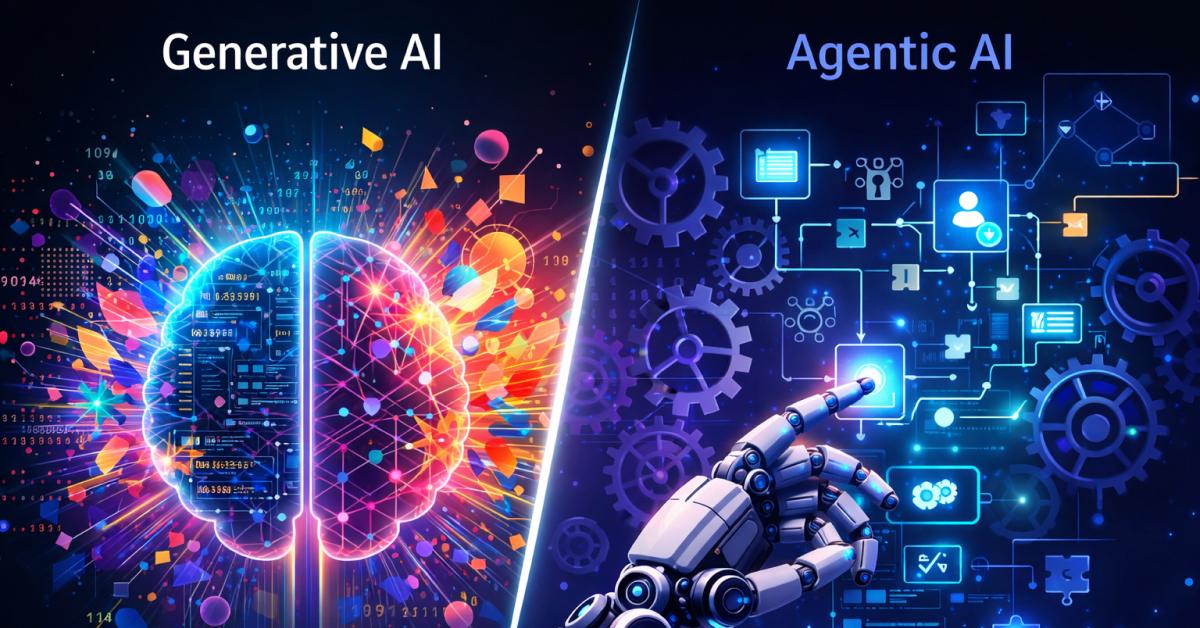
Companies are actively diverting their capital from traditional "Q&A" chatbots to autonomous AI agents. The enterprise AI market has officially evolved past the era of the reactive chat box. Businesses are aggressively shifting away from conversational interfaces that only answer questions. They are moving instead toward goal-oriented automation systems that are capable of executing complex workflows independently.
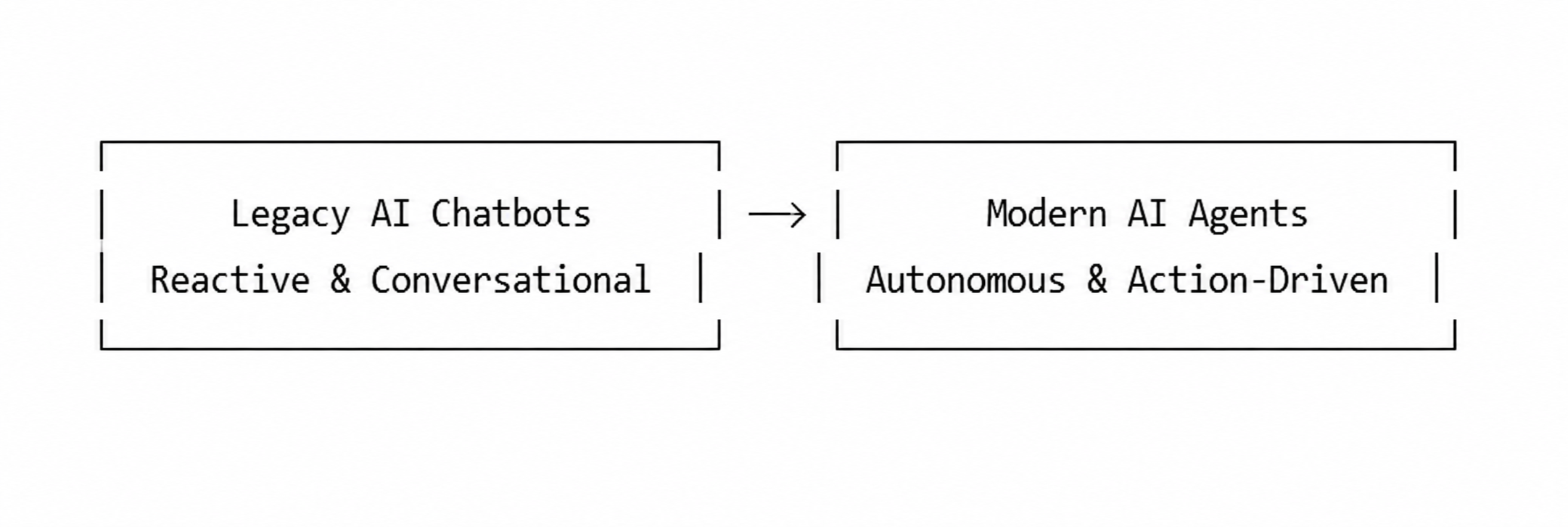
The motivation behind this migration is completely financial. While traditional chatbots successfully reduce customer service handling times, they hit an operational bottleneck. They fail when a task requires accessing multiple databases or processing a transaction. An AI agent helps in breaking through this limitation. It uses multi-step reasoning to think, plan, and use software tools just like a human employee.
According to recent enterprise data, this structural change is driving unprecedented economic results:
- Massive Cost Savings: Companies deploying autonomous agents report an average 30% to 40% reduction in cost-per-task execution compared to basic chatbots. (Nasscom)
- Explosive Market Growth: Driven by this rapid adoption, the global agentic AI market size is projected to climb from $7.55 billion in 2025 to $10.86 billion in 2026, thus consolidating its place as the primary destination for corporate technology investments. (Predence Research)
Architectural Divide: Chatbots vs. AI Agents
Definition Matrix
To understand why corporate budgets are shifting so aggressively, we must look at the structural differences between these two technologies. They operate on completely different software architectures.
|
Feature |
Legacy AI Chatbots |
Modern AI Agents |
|
Core Behavior |
Reactive. Responds only when prompted. |
Proactive. Initiates actions based on broad goals. |
|
Operational Boundary |
Bound by fixed rules or single prompts. |
Tool-integrated. Connects directly to CRMs and APIs. |
|
Interaction Model |
Single-turn conversations or basic Q&A. |
Multi-step reasoning and long-term planning. |
|
Human Dependency |
High. Frequently loops back to humans for actions. |
Low. Fully autonomous execution within set guardrails. |
|
Primary Value Optimization |
Chatbots (like Janitor AI) optimize for the experience of the interaction |
Agentic AI (like Claude Code or CrewAI) optimizes for the outcome of the interaction. |
Workflow Example: Processing a Product Return
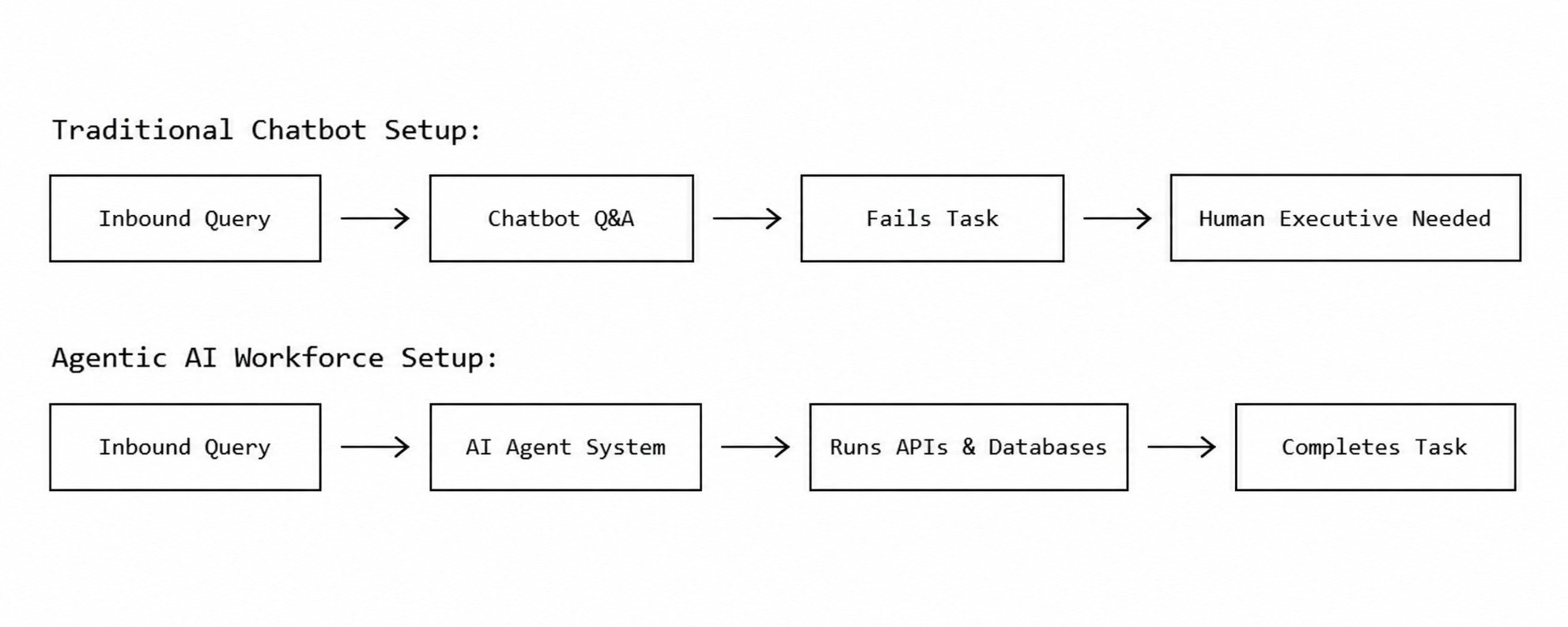
Let us map a common corporate task to see how both systems behave in the real world. A customer messages a company where he/she wants to return a damaged laptop.
Legacy Chatbot Path
The chatbot greets the customer. Then, it scans the input for keywords like "return" or "damaged". It pulls a static text link from its knowledge base. It prints: "Please click here to fill out our return form." The customer must manually log into a portal, upload pictures, and submit a ticket. A human executive then manually reviews the ticket.
Modern AI Agent Path
The AI agent receives the message on WhatsApp Business. Then, it immediately logs into the company's Salesforce Data Cloud to verify the order history. It asks the customer to send a photograph of the damage inside the chat window. The agent then uses computer vision to inspect the image. It checks the company's inventory database for a replacement unit.
Finding it in stock, it updates the ServiceNow internal support ticket. It generates a pre-paid shipping label via an external logistics API. It emails the label to the customer. Finally, it schedules a courier pickup from the customer’s address. It does all this in under 90 seconds without a single human employee touching the file.
Where the Capital is Flowing: Current Investment Vectors
Rather than expanding budgets, enterprises are aggressively optimizing existing IT funds. The Chief Information Officers (CIOs) instead are cutting funds for conversational bots in order to invest in agent platforms. This capital is moving into four distinct channels.
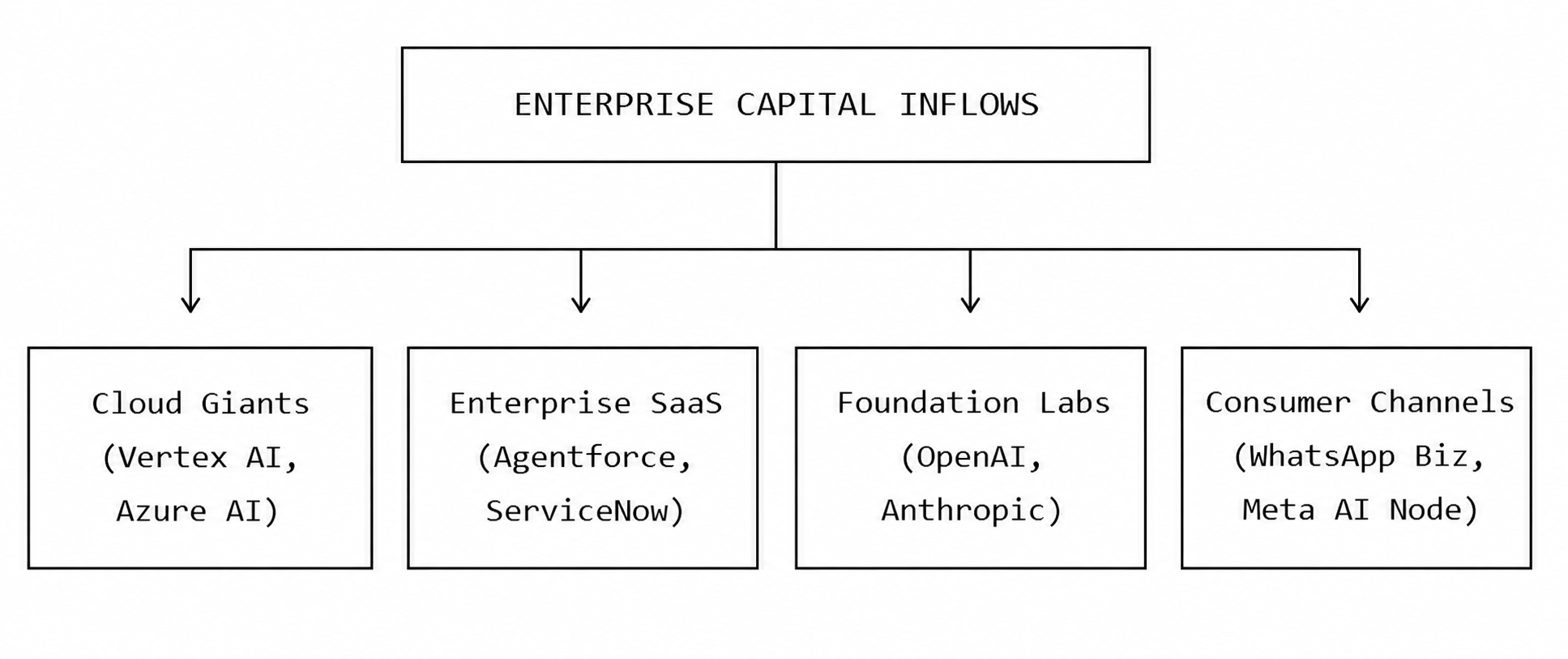
-
Tech Giants
Massive investment is flowing into cloud infrastructure and orchestration frameworks. Enterprises are standardizing on platforms like Google Vertex AI and Microsoft Azure AI. These platforms handle everything behind the scenes — from raw processing and data storage to the security rules needed for custom company agents.
-
Enterprise SaaS Overhauls
Built-in agent ecosystems are displacing legacy software configurations. The launch of Salesforce Agentforce has completely changed enterprise sales pipelines, achieving over $1.4 billion in annualized revenue run-rate. Instead of buying separate automation tools, companies are buying plug-and-play agent modules directly inside their existing business software.
-
Foundational AI Labs
Venture capital trends are heavily targeting companies like OpenAI, Anthropic, and specialized open-source models. The investment focus here is no longer on making models more talkative or friendly. Instead, the capital is chasing operational utility where models are optimized specifically for tool-use, code execution, and high-speed API calling.
-
Consumer Channels
Enterprise-to-consumer agents are scaling fast on dominant messaging platforms people use every day such as WhatsApp. Meta’s worldwide launch of the Meta Business Agent on WhatsApp has turned messaging apps into direct revenue generation tools. Indian enterprises are moving heavily into this space. They are deploying agents that talk to customers in regional scripts to handle whole product purchases inside a single chat window.
Business Case: Why the Shift is Happening Right Now
-
ROI Bottleneck
Traditional generative AI chatbots gave an initial boost to productivity. But companies quickly realized these tools cannot scale further, thus hiting a major roadblock in driving further efficiency. A basic chatbot can easily handle common customer queries. However, it cannot resolve deep, multi-layered business issues.
Because traditional bots cannot update back-end databases, they always have to hand complex tickets off to human workers. As a result, companies are unable to bring down their human labor costs. The business case for pure conversational tools no longer makes any economic sense for companies.
-
Economic Drivers
The transition to agentic AI drastically reduces the cost-per-task execution. While building a complex multi-agent system can cost anywhere from $60,000 to over $300,000, the operational return is incredibly fast.
An AI agent works 24 hours a day, 7 days a week, with zero downtime. It handles thousands of simultaneous transactions without needing an office, insurance, or shift allowances. Therefore, companies, by lowering the average cost-per-task by up to 40%, can recover their initial development costs within 12 to 24 months.
-
Low-Code Accessibility
In the past, building an autonomous system required a massive team of specialized data scientists and software engineers. Today, vendor solutions have removed that barrier.
Platforms now offer drag-and-drop agent builders. Business analysts can now define an agent's specific role, connect it to a data stream, and assign it specific corporate actions using natural language. This low-code environment drops deployment times down to just a few weeks.
-
Data Integration Maturity
Enterprises have spent the last few years modernizing their data architecture. Systems like vector databases and real-time enterprise data clouds are now stable and mature.
Companies now have the security and infrastructure to connect AI engines directly to their main databases and core systems. This lets AI agents read and write information without corrupting underlying data records.
Implementation Risks & The "Human-in-the-Loop" Reality
-
Agency Problem
Giving a software program the power to act on behalf of a company creates serious risks. Traditional chatbots can hallucinate text. This is quite embarrassing but usually manageable.
If an autonomous agent hallucinates, it could mistakenly execute a real software command. It might approve an invalid insurance claim, send a double refund, or delete an entire database row. This leaves companies facing unpredictable financial losses and major legal liabilities.
-
Security & Governance
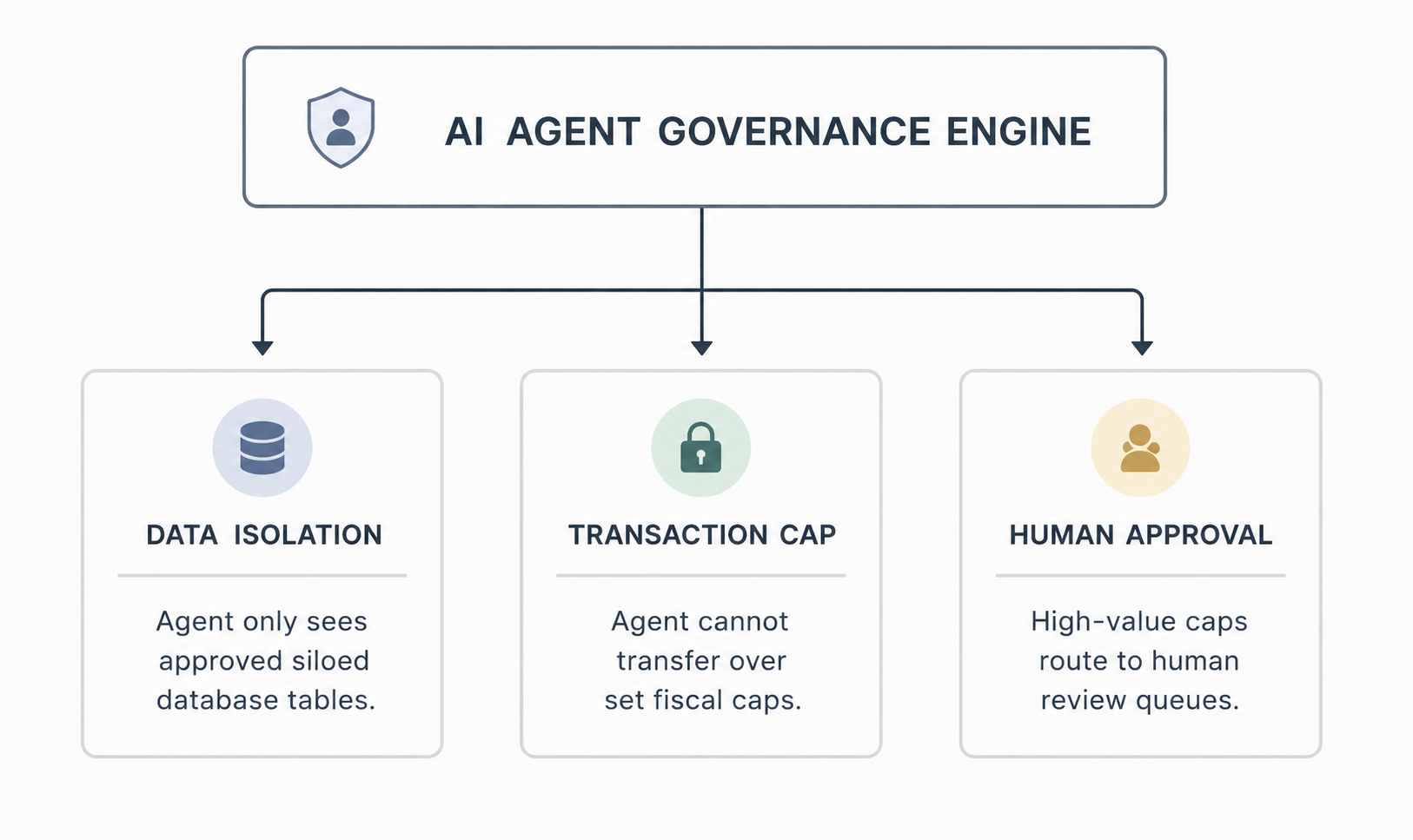
Letting an AI system write data back into corporate software requires incredibly tight controls. Enterprises have to build strict security setups. They must use advanced monitoring networks to make sure agents do not abuse their access.
If an enterprise data layer is set up poorly, an agent might accidentally show sensitive HR payroll data or private client records to an unauthorized user.
-
Hybrid Model
Because autonomous systems can make mistakes, companies are not giving them complete freedom. The smartest enterprise rollouts depend on a strict hybrid setup. This means keeping a "human-in-the-loop" for critical or high-stakes business actions.
An agent can handle all the background research, pull the data files, and draft the transaction. However, if a financial transaction goes over a certain budget cap, the agent stops and sends it to a human manager for final approval.
Conclusion & Strategic Outlook
12-Month Outlook
Over the next year, the corporate landscape will reach peak as far as agent adoption is concerned. We will see the rise of multi-agent networks inside large enterprises. Instead of using a single lone bot, departments will deploy networks of specialized agents that talk directly to each other.
For example, an inbound sales agent will take a lead, pass it to an autonomous financial analyst agent to run a credit check, and then trigger a logistics agent to ship the goods. This will create highly automated corporate operations that require very little daily human management.
Final Takeaway
Running a business on legacy chatbot infrastructure is becoming a massive competitive risk. Companies that depend on basic Q&A bots will get left far behind by rivals operating with fluid, 24/7 autonomous agent workforces.
The corporate world has moved past simple chat widgets. The future belongs to companies that can automate complex workflows at scale, turning conversational AI into an elite engine for business growth.

Frequently Asked Questions
Blogs and Articles
- Oct 23, 2026
- Management
A Thorough Evaluation of EIMT Switzerland: Assessing the Global Utility of Its Online DBA
- EIMT Switzerland’s online DBA is a three-year doctoral program designed for working professionals, combining advanced management studies, applied research, and a practical dissertation. This review examines its academic credibility, international recognition, admission requirements, tuition fees, career relevance, and key factors to verify before enrolling.

- Oct 22, 2026
- Technology

- Oct 12, 2026
- Technology
- Sep 29, 2026
- Management