 United Kingdom
 Switzerland
 United States

 Italy
 France
 India
 UAE
 Germany
 Russia
 Malaysia
 Spain
 United States
 Malta

Programme Key Points
Global Economic Insight : Pursue a B.Sc. in Economics in 36 months from Stride University to develop a deep understanding of global economic systems, financial trends, and analytical skills essential for impactful careers in economics, finance, and policy.
Structured Learning Pathway : Follow a well-designed Economics curriculum that takes you through microeconomics, macroeconomics, econometrics, international economics, and financial policy in a progressive, skills-focused sequence.
Fully Online & Flexible Learning : Access interactive online classes 24/7, allowing you to balance work, internships, and personal commitments while studying at your own pace.
Data-Driven Analytical Expertise : Develop strong quantitative, statistical, and problem-solving skills to analyse complex economic issues and inform business or policy decisions.
Career-Ready for Economic Leaders : Designed for high school graduates and early-career professionals aiming for roles in finance, policy research, consulting, or international organisations.
Programme Highlights
1. Applied Economic Solutions
Engage with real-world economic problems using case studies, policy simulations, and data-driven analysis, preparing you to tackle global economic challenges.
2. Quantitative & Analytical Mastery
Develop advanced skills in econometrics, statistical modelling, and financial analysis, preparing you for analytical roles in business, policy, and research.
3. Global Sustainability & Policy Insight
Learn to evaluate economic strategies through the lens of sustainability, equity, and governance, with a strong international and public-policy focus.
Programme Overview
Stride University provides a fully online and globally accessible Bachelor of Science in Economics in 36 months. The programme helps students develop essential skills in economic analysis, quantitative reasoning, and strategic thinking. Graduates gain the ability to interpret financial systems, evaluate policies, and make informed decisions in diverse global economic environments, preparing them for a wide range of careers in economics, finance, and policy.
Being a future-oriented curriculum, the programme prepares the students with basic economic principles by teaching them microeconomics, macroeconomics, econometrics, and international economics. Apart from this, the students also receive an interdisciplinary exposure to business, mathematics, and data analysis. The mode of teaching is highly practical as the programme incorporates case studies, policy simulations, and real-world economic projects, thus ensuring that the graduates acquire skills that are most sought after by companies, research institutions, and international organisations worldwide.
PROGRAMME SPECIFICS
- Qualification/Award Title: Bachelor of Science in Economics
- Modules: 40
- Delivery Mode: 100% Online
The programme, through a strong focus on analytical thinking, data-driven decision-making, and ethical economic reasoning, prepares the students to handle the challenges in finance, business, public policy, and global markets. A Bachelor's degree in Economics from Stride University would be an excellent launching pad for a career in the fields of economics, finance, consulting, policy research, and international organisations, or further studies at the postgraduate level, whether you are a recent high school graduate or an early-career professional.
Programme Learning Outcomes
After completion of this programme, graduates will be able to:
- Analyse economic systems, market trends, and financial policies at national and international levels.
- Apply econometric and quantitative methods to solve real-world problems and evaluate policy decisions.
- Communicate complex economic ideas and research findings effectively to diverse audiences.
- Demonstrate critical thinking, ethical reasoning, and problem-solving in economic contexts.
- Integrate interdisciplinary knowledge for addressing global economic challenges.

Why Choose this Programme?
Most viewed and all-time top-selling services

1. Flexible Global Career Pathways
2. Internationally Oriented Curriculum
3. Hands-On, Skill-Based Learning
4. Expert Faculty & Personalised Mentorship
5. Collaborative & Supportive Online Environment

Get Free Counselling
Syllabus
General Courses Modules | Credit Score: 30

- English Composition
- Biology
- Introduction to Sociology
- Introduction to Political Science
- College Algebra
- Microeconomics
- Applied Probability and Statistics
- Public Speaking
- Critical Thinking & Writing
- Macroeconomics
Core Courses Modules | Credit Score: 90
- Introduction to Business
- Introduction to Economics
- Business Economics
- Finance I
- Market Economy
- Accounting I
- Introduction to Spreadsheets and Databases
- Project Management
- Decision Models for Business and Economics
- Calculus I
- Statistical Foundations for Econometrics
- International Economics
- Labor Economics
- Law and Economics
- Money and Banking
- Monetary Policy
- Political Economy
- Economics of Entrepreneurship
- Calculus II
- Mathematical Economics
- Econometric Methods
- Economic Development
- Managerial Economics
- Advanced International Trade Theory and Policy
- Game Theory and Economics
- Healthcare Economics
- Environmental Economics
- Public Sector Economics
- Behavioral Economics
- Capstone Project
Courses
Bachelor of Science in Economics
Tuition Fees
$18,000.00
Country
United States
Mode of Teaching
Online
Duration
36 Months
Eligibility
Undergraduate Admission Requirements
- Applicants must submit a valid government-issued identification document.
- A completed High School Diploma, GED, or an equivalent secondary school qualification is required for consideration.
- Students may begin the application process with an unofficial high school transcript. However, an official transcript—sent directly from the issuing institution and showing all grades and the confirmed graduation date—must be provided before enrolment is finalised.
- Candidates wishing to transfer academic credits must provide official transcripts from their previous college or university.
Any document written in a language other than English must be submitted along with a certified English translation.
Career Opportunities
A Community of 1000+ And Counting

Ananya Deshmukh
B.Sc. in Economics programme at Stride University has strengthened my analytical and quantitative skills. Courses in macroeconomics and econometrics helped me secure a research internship at a financial consulting firm. Faculty guidance has been excellent, even across time zones.
Daniel Thompson
I am in the second year of the B.Sc. in Economics course at Stride University. Through practical simulations and case studies, I learned to apply economic theory to real-world scenarios. The online platform connected me with peers globally, making learning collaborative and insightful.
Mei Ling Tan
Stride University’s Bachelors in Economics degree allowed me to balance work and study efficiently. Classes on international trade and financial policy prepared me for an internship in a policy research organisation. Professors were always responsive and supportive.
Carlos Mendoza
Studying economics online at Stride University was a transformative experience. I developed strong research and data analysis skills, and collaborating with students worldwide gave me a global perspective on financial and policy issues.
EAE Graduates Work With
News and Events








Blogs and Articles
- Jul 23, 2026
- Technology
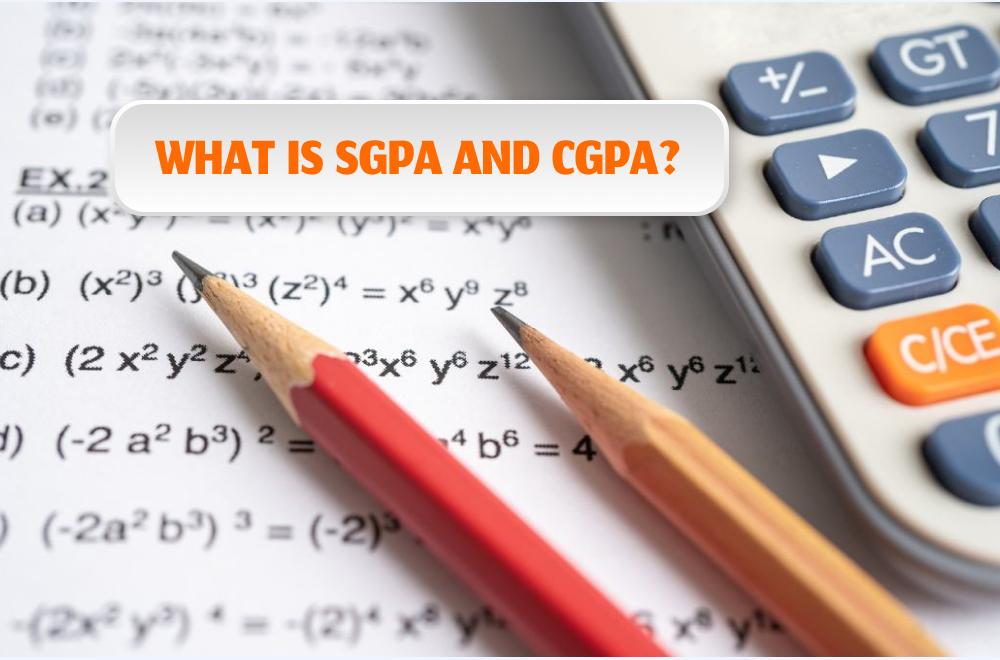
What is SGPA and CGPA? Key Differences, Formula, and How to Calculate
- In college or university, terms like SGPA and CGPA often appear on mark sheets and play a key role in determining scholarships, higher studies, and career opportunities. SGPA measures your performance in a single semester, while CGPA reflects your overall academic journey, progressing more steadily. Recruiters and admission committees evaluate both, making it crucial to understand their differences and learn the correct formulas for calculation. With a strong semester, SGPA can rise quickly, but building a solid CGPA takes consistent effort—both can open doors to internships, global admissions, and scholarships.