

 UAE
UAE

 United Kingdom
 Switzerland
 United States

















 Italy
Italy France
 India
India UAE
UAE Germany
 Russia
 Malaysia
 Spain
Spain United States
 Malta
Malta
40 Chemical Engineering Project Ideas and Topics for Final-year Students
40 Chemical Engineering Project Ideas and Topics for Final-year Students
Chemical Engineering graduates enter a field where process design, energy systems, and environmental control continue to shape production in sectors such as pharmaceuticals, petrochemicals, and food processing. The U.S. Bureau of Labor Statistics reports steady demand for Chemical Engineers in manufacturing, energy, and environmental services, which places strong emphasis on skills in reaction design, separation processes, safety, and process modeling.
Process Design and Optimization Chemical Engineering Project Ideas
This category suits students who prefer calculation-based work and structured design tasks. These project topics rely on concepts taught in core courses and allow clear assumptions, defined inputs, and measurable outputs. Each topic supports detailed design calculations, process logic, and technical justification. Students can complete these projects using standard textbooks, lab data, or simulation support.
1. Design of a batch reactor for pharmaceutical intermediates
This project focuses on selecting reactor size, operating conditions, reaction time, and temperature limits for a defined pharmaceutical compound.
Outcome: Pharmaceutical intermediate production often operates with loosely defined batch conditions, which causes variation in yield, limited reproducibility, and increased safety risk during scale-up. This project addresses this gap by developing a batch reactor design that clearly defines reactor volume, operating temperature range, pressure limits, and batch time, enabling controlled, safe, and repeatable synthesis of a selected pharmaceutical intermediate.
2. Optimization of distillation column stages for ethanol separation
This topic studies tray count, feed location, and reflux ratio to achieve target ethanol purity using steady state calculations.
Outcome: Ethanol separation units frequently operate with non-optimized stage count and reflux settings, which increases energy use and reduces separation performance. This project addresses this issue by determining the optimal number of stages and reflux ratio required to achieve the desired ethanol purity under steady state conditions.
3. Heat exchanger design for industrial cooling systems
This project involves calculating heat duty, choosing exchanger type, and estimating surface area for cooling process streams.
Outcome: Industrial cooling systems often suffer from improper heat exchanger sizing, leading to unstable process temperatures and unnecessary thermal losses. This project focuses on designing a heat exchanger that meets a defined cooling duty through accurate heat load calculation, exchanger selection, and surface area estimation.
4. Process flow design for small-scale chemical production
This topic requires the development of a complete flow diagram with material balances across each unit operation.
Outcome: Many small-scale chemical production units lack a structured process layout, resulting in material losses and poorly defined operating steps. This project resolves this limitation by developing a complete process flow diagram with material balances across each unit operation to establish a technically valid production pathway.
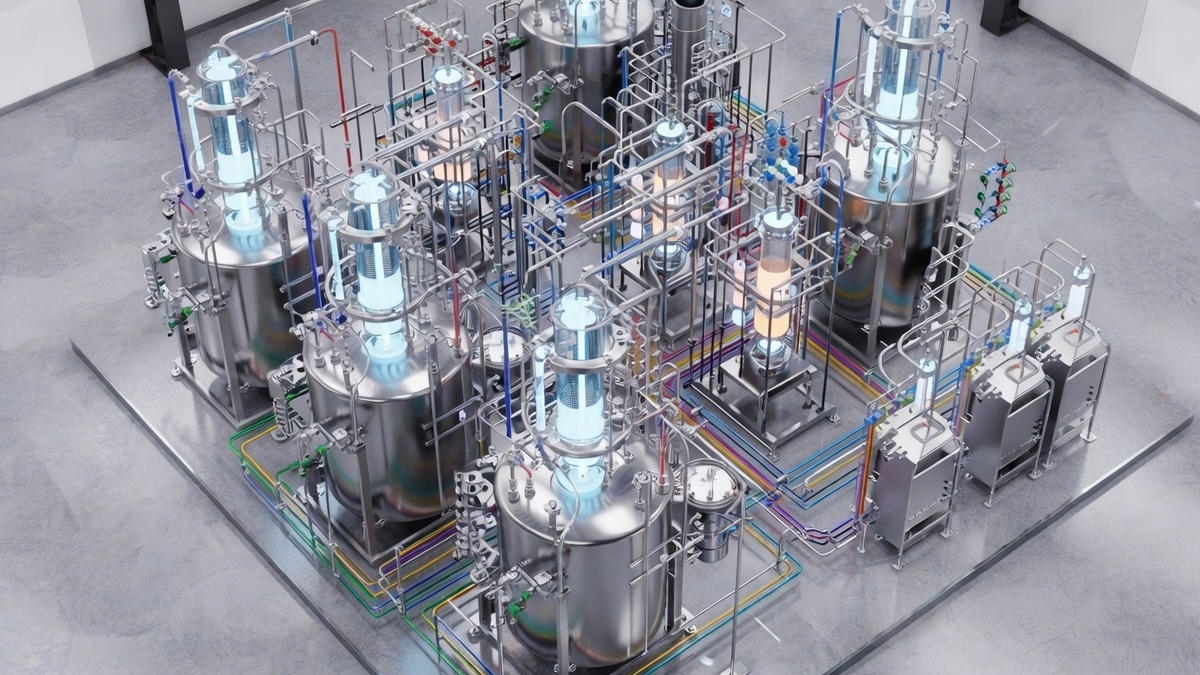
5. Pressure drop analysis in packed bed reactors
This project evaluates flow behavior through packed materials and calculates pressure loss based on fluid properties and packing size.
Outcome: Packed bed reactors commonly experience excessive pressure loss due to incorrect packing selection and flow assumptions, which increases pumping requirements and limits throughout. This project addresses this problem by calculating pressure drop as a function of flow conditions and packing properties to support proper reactor and equipment design.
6. Optimization of feed ratio in continuous stirred tank reactors
This topic examines how feed composition influenced conversion, outlet concentration, and steady state performance.
Outcome: Continuous stirred tank reactors often operate with non-ideal feed ratios, which reduces conversion and leads to inefficient raw material use. This project targets this weakness by identifying the feed composition that achieves the required conversion and stable outlet concentration under steady operation.
Energy and Fuel-Based Project Chemical Engineering Project Topics
This category suits students who want project work linked to energy conversion and fuel processing. These topics rely on mass balance, energy balance, reaction analysis, and system performance evaluation. Each project allows defined inputs, fixed operating conditions, and calculation-driven outcomes. Students can complete these topics using a lab scale, published process data, or simulation tools.
1. Bioethanol production from agricultural waste
This project studies feed preparation, fermentation steps, and separation stages for producing ethanol from biomass sources.
Outcome: Ethanol production from biomass often suffers from inefficient feed utilization and suboptimal fermentation conditions, which limit overall yield and energy efficiency. This project addresses these limitations by developing a process for bioethanol production that optimizes feed preparation, fermentation steps, and separation stages, enabling higher ethanol yield and effective biomass utilization.
2. Biodiesel synthesis using waste cooking oil
This topic focuses on transesterification reactions, yield analysis, and separation of biodiesel and glycerol.
Outcome: Traditional biodiesel production methods frequently result in low conversion efficiency and incomplete separation of byproducts such as glycerol. This project targets this challenge by designing a transesterification process that maximizes biodiesel yield, ensures complete separation of glycerol, and allows safe and reproducible operation.
3. Energy efficiency analysis of industrial boilers
This project evaluates fuel input, heat output, and loss estimation to assess boiler performance.
Outcome: Industrial boilers often operate without proper monitoring of fuel input versus heat output, leading to significant energy losses and reduced operational efficiency. This project addresses this gap by conducting a detailed energy audit to evaluate fuel consumption, heat output, and loss estimation, providing actionable insights for improved boiler efficiency.
4. Hydrogen production using electrochemical methods
This topic examines electrolysis parameters, power input, and hydrogen yield under controlled conditions.
Outcome: Hydrogen production via electrolysis is often limited by high energy consumption and low yield under uncontrolled operating conditions. This project focuses on optimizing electrolysis parameters and power input to maximize hydrogen production while maintaining safe and reproducible operation.
5. Performance evaluation of fuel cell systems
This project analyzes voltage output, fuel utilization, and operating conditions of fuel cell units.
Outcome: Fuel cell systems frequently underperform due to suboptimal operating conditions and inefficient fuel utilization. This project evaluates voltage output, fuel consumption, and operating parameters to establish a benchmark for improving fuel cell efficiency and performance reliability.
6. Thermal analysis of steam power cycles
This topic studies energy flow, cycle components, and thermal performance of steam-based systems.
Outcome: Steam-based power cycles commonly exhibit energy losses across components and lack clarity in thermal efficiency analysis. This project addresses this issue by studying energy flow, evaluating each cycle component, and analyzing overall thermal performance to identify areas for efficiency improvement.
Materials and Polymer Chemical Engineering Project Ideas
This category suits students who are comfortable with lab testing, material characterization, and polymer analysis. Each project allows defined inputs, experimental or simulation work, and measurable outcomes. Students can complete these projects using lab experiments, characterization techniques, or published data.
1. Preparation and Testing of Biodegradable Polymers
This project studies the synthesis process and evaluates the mechanical and degradation properties of biodegradable polymers.
Outcome: Conventional polymer production generates plastics that persist in the environment and contribute to long-term waste. This project addresses this gap by preparing biodegradable polymers and assessing their mechanical and degradation behavior, enabling the development of environmentally friendly materials suitable for practical applications.
2. Mechanical Property Analysis of Polymer Composites
This topic focuses on evaluating tensile, compressive, and impact properties of polymer composites under controlled testing conditions.
Outcome: Polymer composites are often used without proper assessment of their mechanical limits, which can lead to failure in structural or industrial applications. This project quantifies the mechanical behavior of polymer composites, providing reliable data for safe material selection and design.
3. Synthesis and Characterization of Polymer Blends
This project investigates the preparation and compatibility of different polymer blends, analyzing thermal and mechanical properties.
Outcome: Many polymer blends exhibit poor compatibility and inconsistent properties, limiting their industrial usability. This project addresses these limitations by optimizing blend composition and characterizing the resulting material, ensuring improved performance and applicability.
4. Effects of Fillers on Plastic Strength
This topic evaluates how different filler materials and loading influence the mechanical strength of plastics.
Outcome: Plastic products often fail to meet required strength specifications due to improper filler selection or concentration. This project determines the optimal filler type and proportion to enhance mechanical performance, producing stronger and more durable plastic materials.
5. Thermal Behavior of Thermoplastic Materials
This project studies heat resistance, thermal transitions, and deformation characteristics of thermoplastics under various conditions.
Outcome: Thermoplastics may experience deformation or failure during processing or use due to unknown thermal behavior. This project investigates thermal properties, enabling safer processing parameters and reliable application of thermoplastic materials in industrial contexts.
6. Plastic Waste Recycling Process Study
This topic develops methods for the recovery, purification, and reuse of plastic waste to produce recycled materials.
Outcome: Inefficient plastic recycling often results in material loss and low-quality products. This project establishes an optimized recycling process that produces consistent, reusable plastics, reducing environmental impact and contributing to sustainable materials management.
Environment and Waste Treatment Chemical Engineering Project Ideas
This category suits students focused on water treatment and pollution control. These projects rely on mass balance, reaction principles, separation processes, and treatment efficiency analysis. Each topic allows defined operating conditions, measurable removal performance, and clear technical outcomes. Students can complete these projects using lab experiments, publish treatment data, or process design methods.
1. Wastewater Treatment Using Adsorption Techniques
This project studies the use of solid adsorbents to remove contaminants from wastewater under controlled conditions.
Outcome: Many wastewater treatment systems fail to remove dissolved pollutants effectively, leading to discharge quality issues. This project develops an adsorption-based treatment method that improves contaminant removal efficiency and supports safer wastewater disposal.
2. Design of Effluent Treatment Plant for Chemical Industries
This topic focuses on designing a complete treatment system for industrial wastewater streams generated from chemical processing units.
Outcome: Chemical industries often lack properly designed effluent treatment systems, resulting in untreated or partially treated wastewater discharge. This project delivers a structured effluent treatment plant design that meets discharge requirements through defined treatment stages and material balances.
3. Removal of Heavy Metals from Industrial Wastewater
This project examines chemical and physical methods for removing heavy metals from wastewater streams.
Outcome: Heavy metals in industrial wastewater pose serious risks to ecosystems and human health due to their toxic and persistent nature. This project establishes an effective removal process that reduces metal concentration to acceptable levels, improving environmental safety.
4. Activated Carbon Preparation for Pollution Control
This topic studies the preparation and performance evaluation of activated carbon derived from suitable raw materials.
Outcome: Commercial activated carbon can be costly and limited in availability for pollution control applications. This project develops an alternative activated carbon preparation method that delivers effective adsorption performance at reduced material cost.
5. Treatment of Dye Wastewater Using Chemical Methods
This project focuses on chemical treatment techniques for removing color and organic load from dye-containing wastewater.
Outcome: Dye wastewater often resists conventional treatment methods and remains highly visible even at low concentrations. This project identifies chemical treatment conditions that achieve effective color removal and improved effluent quality.
6. Industrial Waste Minimization Process Design
This topic develops strategies to reduce waste generation within chemical production processes.
Outcome: Many chemical processes generate avoidable waste due to inefficient material usage and process design. This project proposes a waste minimization process that reduces waste generation at the source, improving material utilization and environmental performance.
Chemical Reaction Engineering Project Ideas
This category suits students interested in reaction kinetics, reactor behavior, and performance evaluation. These projects focus on reaction rate analysis, conversion behavior, and the influence of operating conditions on reactor output. Each topic allows controlled assumptions, mathematical modeling, and clear comparison of results. Students can complete these projects using lab experiments, kinetic data, or reactor design equations.
1. Kinetic Study of Esterification Reactions
This project studies the rate of esterification reactions under controlled concentration and temperature conditions to understand reaction behavior over time.
Outcome: Esterification reactions often run without accurate kinetic data, which limits the prediction of reaction time and conversion. This project develops a kinetic model by determining rate equations and reaction constants, enabling better prediction of conversion and reactor design requirements.
2. Temperature Effect on Reaction Rate Constants
This topic focuses on analyzing how temperature variation influences reaction rate constants and overall reaction speed.
Outcome: Many chemical reactions operate without a precise understanding of temperature sensitivity, leading to poor control and inconsistent output. This project quantifies the relationship between temperature and reaction rate constants, supporting better temperature selection for stable and predictable reactor operation.
3. Conversion Analysis in Plug Flow Reactors
This project examines how conversion changes along the length of a plug flow reactor under defined flow and reaction conditions.
Outcome: Plug flow reactors are often designed using assumed conversion values without detailed validation. This project calculates conversion profiles along the reactor length, supporting accurate reactor sizing and improved prediction of outlet composition.
4. Catalyst Performance Comparison Studies
This topic compares different catalysts for the same reaction based on activity, conversion, and stability.
Outcome: Catalyst selection often relies on availability rather than performance data, which can reduce reaction efficiency. This project evaluates and compares catalyst performance, helping identify the most suitable catalyst for sustained reaction output.
5. Residence Time Analysis in Continuous Reactors
This project studies the effect of residence time on conversion and product concentration in continuous reactor systems.
Outcome: Improper residence time selection frequently leads to incomplete reactions or unnecessary energy use. This project determines the residence time required to achieve target conversion, supporting balanced reactor design and stable continuous operation.
Simulation and Modeling-Based Project Topics
This category suits students who want software-focused project work with a strong analytical direction. These topics allow controlled assumptions, clear input variables, and measurable outputs. Students can complete these projects using simulation platforms such as Aspen Plus, MATLAB, or CONSOL. The objective is to predict process behavior, compare operating conditions, and validate theoretical calculations through virtual testing rather than full lab setups.
1. Simulation of Distillation Processes Using Aspen Plus
This project models distillation columns to examine tray count, reflux ratio, feed location, and product purity under different operating conditions.
Outcome: Many distillation designs rely on manual calculations that may overlook interactions between column parameters. This project addresses that limitation by simulating column parameters. This project addresses that limitation by simulating column behavior in Aspen Plus, allowing students to predict product purity, identify operating conditions that improve separation, and justify design choices with simulation-based results.
2. Reactor Modeling Using MATLAB
This topic focuses on simulating batch, plug flow, or continuous stirred tank reactors to observe conversion, concentration profiles, and reaction rate changes.
Outcome: Reactor performance predictions often lack accurate validation when based on textbook equations. This project bridges that gap by using MATLAB to model reactor behavior, compare kinetics under varied conditions, and support informed reactor design with quantitative simulation outputs.
3. Heat Transfer Modeling Using COMSOL
This project examines conduction, convection, and heat distribution in heat exchanges or process equipment using COMSOL simulations.
Outcome: Heat transfer calculations can overlook complex temperature gradients and boundary effects when solved by hand. This project resolves that issue by modeling heat transfer in COMSOL, helping students visualize temperature distribution and identify conditions that support stable heat management in equipment.
4. Process Optimization Using Simulation Tools
This topic applies simulation software to evaluate changes in feed ratios, operating temperature, or flow rates with the aim of improving process performance.
Outcome: Industrial processes may operate below their potential due to limited assessment of operating variables. This project uses simulation to analyze alternative process conditions, compare output quality, and select parameters that strengthen process performance without requiring extensive trial-and-error experimentation.
5. Mass Balance Validation Through Process Simulation
This project uses simulation methods to validate component flows, product outputs, and material recovery across process units.
Outcome: Manual mass balance work can lead to calculation gaps or overlooked side streams. This project supports validation by simulating unit operations and confirming material distribution across each stage, helping students detect inconsistencies and produce defensible mass balance results.
Food, Pharmaceutical, and Bioprocess Engineering Project Ideas
This category suits students interested in processing, quality control, and bio-based production systems. These projects include process design, microbial analysis, food safety evaluation, and formulation studies. Students can complete these projects using lab-scale experiments, published kinetic data, or simulation tools. The goal is to improve product quality, enhance process reliability, and address challenges in food and pharmaceutical production.
1. Production of Lactic Acid Through Fermentation
This project studies fermentation conditions, nutrient requirements, and microbial performance for the production of lactic acid.
Outcome: Lactic acid production in fermentation systems is frequently limited by poor nutrient control and fluctuating microbial activity, which reduces yield and consistency. This project develops controlled fermentation conditions that improve lactic acid output, enhance microbial performance, and establish parameters for steady production.
2. Formulation and Stability Study of Pharmaceutical Suspensions
This topic focuses on ingredient selection, mixing conditions, and stability evaluation for liquid pharmaceutical suspensions.
Outcome: Pharmaceutical suspensions may suffer from setting, poor dispersion, and instability during storage, affecting dosage accuracy. This project evaluates formulation choices and stability behavior to develop suspensions with improved homogeneity and reliable shelf performance.
3. Quality Assessment of Pasteurized Milk
This project examines pasteurization parameters, microbial counts, and quality indicators to evaluate milk safety and shelf behavior.
Outcome: Inadequate pasteurization conditions can lead to microbial survival and quality degradation, posing safety concerns. This project assesses pasteurization performance and quality metrics, helping establish parameters that ensure safer milk and extended shelf behavior.
4. Enzyme Kinetics for Food Processing Applications
This topic studies enzyme activity under varying temperature and pH conditions for use in food processing.
Outcome: Enzyme applications may fail to achieve target conversion when operated outside optimal temperature and pH conditions. This project evaluates enzyme kinetics to define operating parameters that maximize enzymatic activity and support efficient food processing.
5. Bioreactor Design for Antibiotic Production
This project focuses on reactor type selection, aeration requirements, and mixing conditions for antibiotic production on a controlled scale.
Outcome: Antibiotic production often suffers from low yield due to insufficient mixing and oxygen transfer in bioreactor systems. This project designs a bioreactor that supports improved aeration and mixing, promoting stable microbial growth and higher product yield.
6. Nutrient Fortification in Processed Food Products
This project studies the addition of vitamins or minerals to processed foods and analyzes their stability during storage and processing.
Outcome: Nutrient fortification can lose effectiveness when degradation occurs during processing or storage. This project evaluates fortification techniques and stability parameters to improve nutrient retention and support quality in processed foods.
Conclusion
Projects aligned with core engineering functions prepare students for roles such as process engineer, production engineer, quality engineer, energy systems engineer, and process design analyst. Topics with precise calculations, assumptions, and outcomes also support entry into graduate programs, R&D roles, and plant operations teams.
Selecting a project with measurable objectives and industry relevance strengthens technical credibility and improves access to higher-responsibility positions within chemical manufacturing, energy, and process industries.

Frequently Asked Questions
Blogs and Articles
- Sep 29, 2026
- Management
Top Online DBA Specialisations: Utility, Benefits, and Global Salary Benchmarks
- Explore the top online DBA specialisations, their benefits and career scope, with global salary benchmarks to help professionals choose the right doctoral path.


- Sep 28, 2026
- Management

- Sep 12, 2026
- Technology

- Sep 11, 2026
- Technology